
Turmeric is more than just the golden spice that adds color to curries. Around the world, this ancient root grows in many varieties. Each with its own aroma, hue, and healing power. Farmers grow several turmeric types, each with its own color, taste, and medicinal value.
Across Asia especially in India, Indonesia, and Thailand , from the vibrant yellow turmeric you see in curry powder to the mysterious black turmeric used in traditional medicine, each type tells a fascinating story about its origin and use.
In this article, we’ll explore the different types of turmeric around the world, what makes them unique, and how you can choose the right one for your needs.
1. Yellow Turmeric (Curcuma longa) — The Classic Among All Turmeric Types
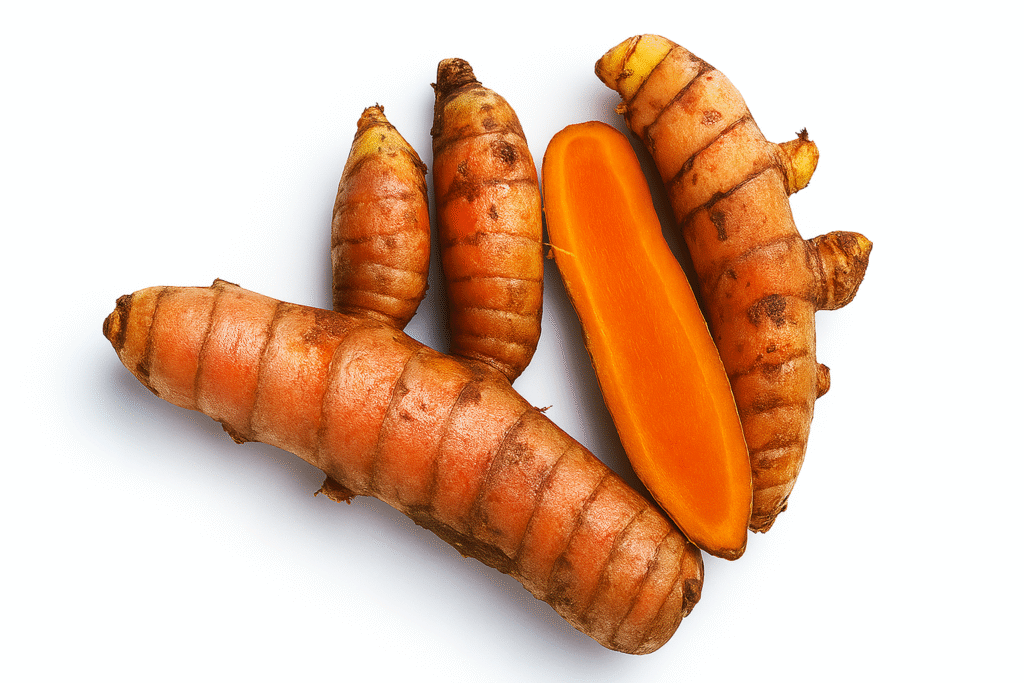
Yellow turmeric is the most common and widely recognized type of turmeric. It’s the bright golden powder that gives curry its signature color.
- Origin: India, Thailand, and Indonesia
- Appearance: Golden-yellow rhizome with a warm, earthy aroma
- Main Active Compound: Curcumin, known for its anti-inflammatory and antioxidant power
- Common Uses: Cooking spice, skincare, herbal medicine, and dietary supplements
In India, yellow turmeric is not just food but also a powerful cultural symbol. For centuries, it has been used in weddings, religious rituals, and traditional Ayurvedic medicine to promote purification and protection. Today, however, modern science supports what ancient healers already knew — that curcumin can help fight inflammation, improve skin health, and strengthen the immune system.
2. White Turmeric (Curcuma zedoaria) — The Fragrant Healer
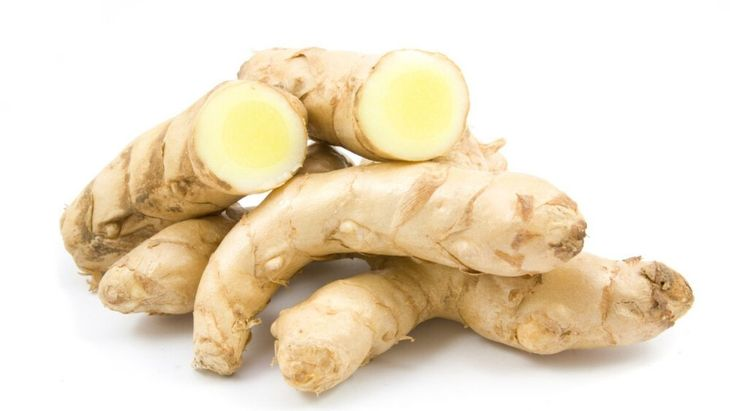
Next on our list of turmeric types is the lesser-known Curcuma zedoaria, also called white turmeric. Unlike the common yellow variety, this type closely resembles ginger, yet it surprises many with its light yellow interior and refreshing, camphor-like fragrance. Because of its distinctive aroma and cooling effect, white turmeric has become a favorite ingredient in both herbal remedies and natural skincare traditions.
- Origin: India and Southeast Asia
- Flavor Profile: Slightly spicy, with hints of camphor and mango
- Uses: Herbal tonics, pickles, and perfumes
- Health Benefits: Aids digestion, relieves inflammation, and supports liver health
Ayurvedic and Indonesian jamu healers value white turmeric for its ability to soothe stomach problems and cleanse the body. They often use it in powder or paste form, mixing it into herbal drinks to reduce bloating and improve appetite.
Although less popular than yellow turmeric, white turmeric is now gaining widespread attention for its gentle healing properties and distinctive aroma. As a result, it fits beautifully into modern culinary fusions and traditional herbal remedies alike.
3. Black Turmeric (Curcuma caesia) — The Rare and Powerful Types
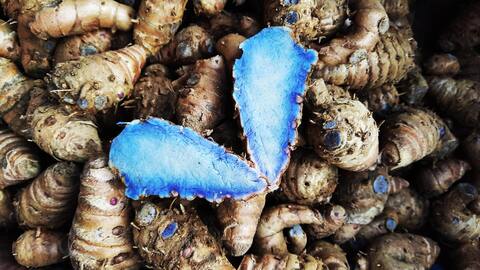
Among all turmeric types, black turmeric stands out as the rarest and most mysterious. Its interior color ranges from deep blue to violet-black, and its aroma is more intense than regular turmeric.
- Origin: Northeastern India, Nepal, and parts of Indonesia
- Color & Texture: Dark blue-black flesh, smooth outer skin
- Uses: Traditional medicine, energy tonics, and natural dye
- Believed Benefits: Pain relief, respiratory support, and increased vitality
Black turmeric has long been used in Ayurvedic and tribal medicine for respiratory issues, joint pain, and fatigue. However, due to its potency, it’s usually consumed in small amounts or mixed with honey and milk.
It’s not commonly found in regular markets, but holistic health enthusiasts and researchers are now studying it for potential antiviral and antioxidant properties. If yellow turmeric is the “everyday spice,” black turmeric is the “hidden gem” among turmeric types.
4. Mango Ginger (Curcuma amada) — The Sweet and Tangy Turmeric Type
Mango ginger is another interesting member of the turmeric family. While it looks like regular turmeric, its flavor is completely different. In fact, it’s tangy, fruity, and remarkably reminiscent of raw mango.
- Origin: India, Myanmar, Thailand, and Indonesia
- Color & Flavor: Light yellow with a citrus-like aroma
- Uses: Pickles, chutneys, herbal drinks, and salad seasoning
- Benefits: Improves digestion, relieves nausea, and reduces inflammation
This variety proves that turmeric types are not just about color, but also taste. Mango ginger is a favorite in Indian households and Southeast Asian cuisine for its refreshing twist. It’s often used in summer recipes to cool the body and stimulate appetite, a perfect blend of taste and health.
5. Java Turmeric (Curcuma xanthorrhiza) — Indonesia’s Golden Treasure
Known locally as temu lawak, Java turmeric is native to Indonesia and one of the most studied turmeric types for its medicinal value.
- Origin: Java and Borneo Islands
- Color & Flavor: Deep orange-yellow with a slightly bitter taste
- Key Nutrient: Xanthorrhizol, a compound known for supporting liver health
- Uses: Herbal drinks (jamu), supplements, and skincare products
Java turmeric has been part of Indonesian herbal culture for centuries. Traditional jamu sellers still use it today to create drinks that detoxify the body, strengthen the immune system, and boost energy.
Because of its curcumin-rich content, Java turmeric is now exported and used in many health supplements worldwide. It’s a great example of how local wisdom contributes to global wellness.
Other Notable Turmeric Types Around the World
While the five varieties above are the most well-known, there are many other regional turmeric types worth mentioning:
Chinese Turmeric (Curcuma aromatica): lighter color, used in cosmetics and aromatherapy.
Burmese Turmeric: high in curcumin, used mainly for traditional medicine.
Thai Turmeric (Khamin chan): sweeter and milder, ideal for curries and soups.
Bangladeshi Turmeric (Rajapuri): prized for its intense color and flavor.
Each of these local types adapts to its soil and climate, creating unique variations in taste, texture, and healing potential.
Knowing the differences between turmeric types not only helps you make smarter choices for flavor but also for your health. Moreover, each type carries a unique balance of nutrients, aroma, and healing properties that contribute to overall wellness.
Furthermore, from yellow turmeric’s global fame to Java turmeric’s rising popularity, these varieties demonstrate how one humble root can reflect such rich cultural diversity and scientific potential. As a result, by exploring different turmeric types, we gain a deeper appreciation for our shared heritage, a living bridge between ancient wisdom and modern wellness.